

The phrase “Opel meaning” pops up in search engines more often than you might expect. Some people want a quick Opel definition. Others wonder what is Opel, where the brand came from, and why the name shows up on millions of cars across Europe.
Here’s the short version.
Opel is a German automobile manufacturer founded in 1862 by Adam Opel. Today the brand operates under the multinational automotive group Stellantis and produces passenger cars, SUVs, and electric vehicles sold mainly in Europe.
But the name carries far more history than that brief description suggests.
Behind the word “Opel” lies a fascinating story of industrial ambition, engineering breakthroughs, economic upheaval, and a brand that survived multiple ownership changes. The company began with sewing machines, moved into bicycles, then eventually helped shape modern European automotive manufacturing.
This guide explores opel meaning, origin, and brand history in depth. By the end, you will clearly understand:
- The real Opel definition
- What Opel stands for
- Where the name Opel came from
- Why Opel became one of Europe’s most recognized car brands
- The symbolism behind the Opel logo
- How the company evolved from a small German workshop to a global manufacturer
Let’s begin with the most important question.
Opel Meaning: Simple Definition
Opel Definition
The Opel definition refers to a German automobile manufacturer known for producing passenger vehicles, SUVs, and electric cars primarily for the European market.
The brand name originates from its founder, Adam Opel, whose family built one of Germany’s most influential industrial companies.
In modern usage, the word Opel functions as a proper noun referring to:
- A car manufacturer
- A vehicle brand
- A historic German engineering company
Unlike some corporate names, Opel does not represent an acronym. Instead, it is simply the surname of the founder which later evolved into a global automotive identity.
What Is Opel?
If someone asks what is Opel, the most accurate answer is simple.
Opel is a German automotive brand that designs and manufactures cars, SUVs, and electric vehicles.
The company headquarters sits in Rüsselsheim which has served as the brand’s engineering and development hub for more than a century.
Today Opel operates as part of the multinational automotive group Stellantis.
Stellantis owns several famous brands including:
- Peugeot
- Citroën
- Fiat
- Jeep
Within this group Opel represents the German engineering branch focused on practical and affordable vehicles.
Industries Associated With Opel
Although Opel is primarily known for cars, the company historically operated in several industries.
| Industry | Years Active | Products |
|---|---|---|
| Sewing Machines | 1862–1895 | Industrial sewing equipment |
| Bicycle Manufacturing | 1886–1930s | Racing and commuter bicycles |
| Automotive | 1899–Present | Cars, SUVs, electric vehicles |
Interestingly Opel once produced the largest number of bicycles in the world during the 1920s.
That early engineering expertise laid the foundation for its future automobile success.
Origin of the Word “Opel”
Opel Name Origin
The Opel meaning traces directly back to the family surname Opel which has German linguistic roots.
The surname likely originated from Middle High German occupational or regional naming traditions. Many German surnames evolved from professions or geographical references.
However in the case of Opel the name’s significance today comes almost entirely from the industrial legacy created by the Opel family.
Who Founded Opel?
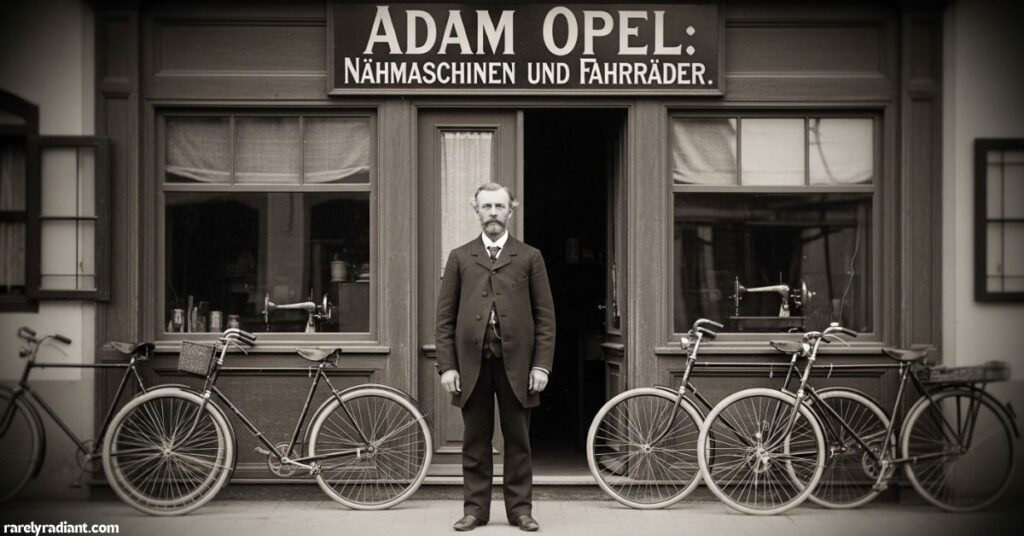
The company founder was Adam Opel, a mechanical innovator born in 1837.
Adam Opel trained as a locksmith and machinist. As a young man he traveled through Europe gaining experience with emerging industrial technologies.
In 1862 he returned to Germany and started a small workshop producing sewing machines.
What began as a modest mechanical business eventually transformed into one of Europe’s most important automotive companies.
Early Life of Adam Opel
A few key facts about the founder.
| Detail | Information |
|---|---|
| Born | May 9, 1837 |
| Birthplace | Rüsselsheim, Germany |
| Profession | Industrial entrepreneur |
| First Business | Sewing machine manufacturing |
| Automotive Entry | 1899 (after his death) |
Interestingly Adam Opel never built a car himself. The company entered automobile production a few years after his death guided by his family.
Read Also: PMTFO Meaning: What It Means in Text, Chat, and Social Media
Is Opel a German Company?
The short answer is yes.
Despite various ownership changes throughout the twentieth century Opel remains fundamentally a German engineering company.
Its headquarters still sits in Rüsselsheim where the company began.
Opel Ownership History
Over the decades Opel has passed through several major corporate owners.
| Year | Owner |
|---|---|
| 1862–1929 | Opel Family |
| 1929–2017 | General Motors |
| 2017–2021 | Groupe PSA |
| 2021–Present | Stellantis |
This ownership history illustrates how Opel evolved from a family business into a global automotive brand.
Yet the engineering center and brand identity remain strongly German.
Opel History and Brand Evolution
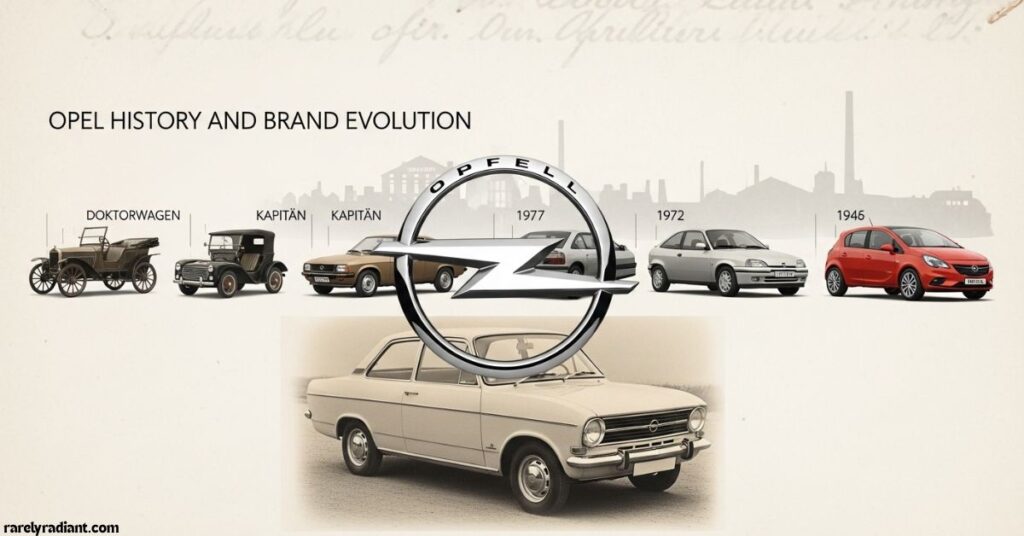
Understanding Opel meaning requires examining the company’s long and eventful history.
Few European manufacturers have survived as many economic cycles, wars, and technological revolutions.
Founding Era: Sewing Machines
When Adam Opel opened his workshop in 1862 Germany was rapidly industrializing.
Factories and mechanized production began replacing traditional crafts. Sewing machines represented one of the most revolutionary consumer technologies of that era.
Opel quickly built a reputation for reliable and affordable machines.
Within two decades the company had become Germany’s largest sewing machine manufacturer.
Bicycle Revolution
In 1886 the Opel company entered another booming market: bicycles.
Cycling had become wildly popular across Europe. Racing events filled newspapers. Middle class commuters embraced bicycles for everyday travel.
Opel responded by producing high quality bikes and sponsoring competitive racers.
By the 1920s Opel had become the world’s largest bicycle manufacturer.
Entry Into Automobile Manufacturing
The automobile division began in 1899 when the Opel family partnered with a car manufacturer.
Their first vehicle was the Opel Patent Motor Car System Lutzmann.
Although early production remained small Opel quickly recognized the future potential of automobiles.
Mass Production Breakthrough
A major turning point arrived in 1924.
Opel introduced assembly line production inspired by American automotive factories.
This innovation dramatically lowered vehicle costs.
Soon Opel became Germany’s largest car manufacturer.
Opel Logo Meaning and Symbolism
Brand symbols often carry powerful meanings.
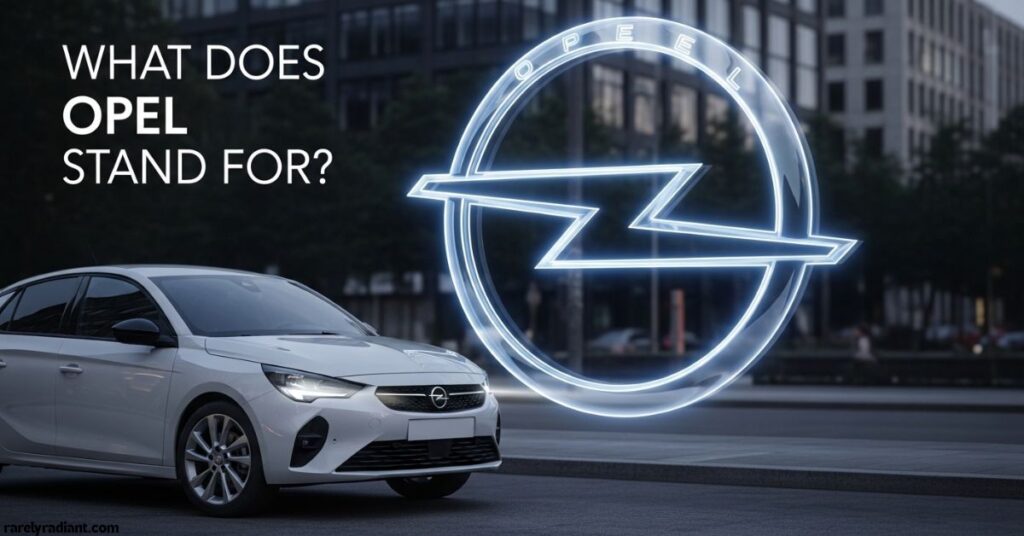
The Opel logo featuring a lightning bolt within a circle represents the company’s engineering philosophy.
Read Also: GTD Meaning in NBA Injury Reports Explained Simply
What Does the Opel Logo Represent?
The lightning bolt symbolizes:
- Speed
- Energy
- Innovation
- Technological progress
These ideas align perfectly with the automotive industry where performance and engineering advancement matter deeply.
Evolution of the Opel Logo
The lightning bolt design did not appear immediately.
Earlier Opel logos used simple lettering or decorative emblems. The lightning symbol gradually emerged during the mid twentieth century.
Today the logo features a sleek bolt cutting across a circle.
What Does Opel Stand For?
Many brands represent acronyms.
For example:
- BMW stands for Bayerische Motoren Werke
- FIAT stands for Fabbrica Italiana Automobili Torino
However Opel is not an acronym.
The name simply honors the founder Adam Opel.
Using family names as brand identities was extremely common during the early industrial era.
Opel Meaning in the Automotive Industry
Within the automotive world Opel meaning represents practical German engineering.
The brand occupies a unique position between economy vehicles and premium luxury cars.
Opel focuses on efficient reliable vehicles designed for everyday drivers.
Types of Vehicles Produced by Opel
Opel manufactures several vehicle categories.
Passenger Cars
Compact and midsize sedans designed for European roads.
SUVs
Modern crossovers that combine practicality and comfort.
Electric Vehicles
Battery powered models built to meet European emissions regulations.
Commercial Vans
Utility vehicles used by businesses across Europe.
Famous Opel Models That Built the Brand
Several models helped shape Opel’s reputation.
| Model | Launch Year | Vehicle Type |
|---|---|---|
| Corsa | 1982 | Supermini |
| Astra | 1991 | Compact car |
| Insignia | 2008 | Mid size sedan |
| Mokka | 2012 | Compact SUV |
Case Study: Opel Corsa
The Opel Corsa became one of Europe’s most popular small cars.
Since its introduction in 1982 millions of units have been sold.
Reasons for its success include:
- Compact size perfect for European cities
- Affordable pricing
- Efficient engines
- Modern design updates
The Corsa helped Opel capture a huge portion of the European supermini market.
Read Also: SYFM Meaning: Full Form, Text Slang Definition & How to Use It Online
Opel vs Other European Car Brands
To fully understand what is Opel, it helps to compare the brand with other major manufacturers.
| Brand | Market Position | Focus |
|---|---|---|
| Opel | Mass market | Practical engineering |
| Volkswagen | Global mainstream | Broad product range |
| BMW | Premium | Performance luxury |
| Mercedes-Benz | Luxury | Innovation and prestige |
Opel competes primarily in the affordable mainstream segment rather than the luxury market.
Opel Pronunciation and Meaning
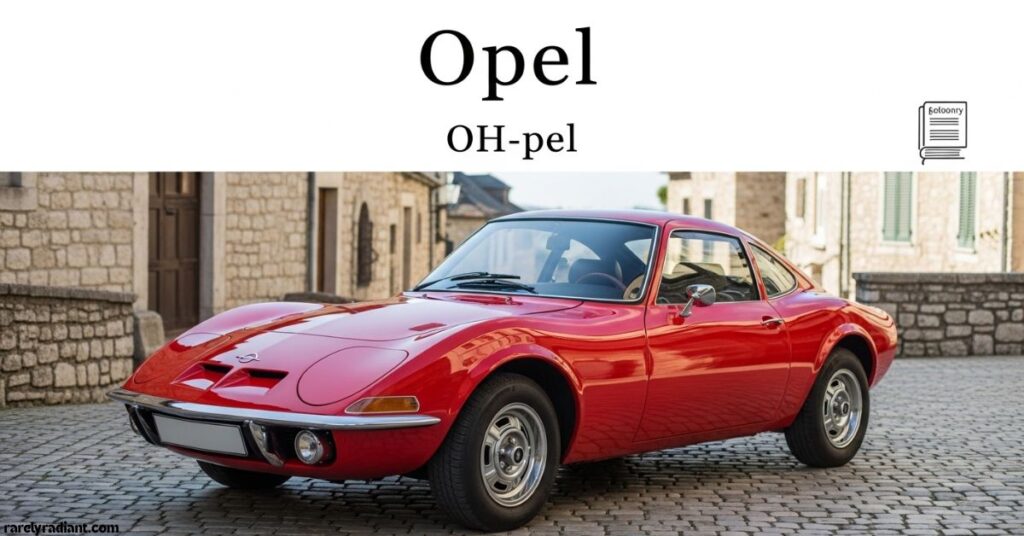
The correct pronunciation of Opel is:
OH-pel
The first syllable sounds like oh and the second like pell.
Many English speakers mistakenly pronounce it as Opal, which refers to a gemstone.
Why People Search “Opel Meaning” Online
Search data shows several reasons people look for the phrase opel meaning.
Common motivations include:
- Learning about a car brand before buying a vehicle
- Curiosity about the origin of the company name
- Understanding logo symbolism
- Researching automotive history
Students researching industrial history also frequently encounter the Opel brand in European manufacturing case studies.
Key Facts About Opel
| Fact | Information |
|---|---|
| Founded | 1862 |
| Founder | Adam Opel |
| Headquarters | Rüsselsheim |
| Current Owner | Stellantis |
| First Car Produced | 1899 |
| Industry | Automotive manufacturing |
These numbers illustrate the company’s remarkable longevity.
Very few manufacturers survive more than a century.
The Future of Opel
Like many automakers Opel is rapidly transitioning toward electric mobility.
European environmental regulations require dramatic reductions in carbon emissions. As a result Opel has announced plans to offer fully electric versions of many models.
Under the Stellantis group the company benefits from shared engineering platforms and battery technologies.
Conclusion
The phrase opel meaning might seem simple at first glance. However the name carries more than 160 years of industrial heritage.
The Opel definition refers to a historic German automotive manufacturer founded by Adam Opel in 1862. What began as a sewing machine workshop evolved into one of Europe’s most influential vehicle producers.
Understanding what is Opel means recognizing its journey through multiple industries:
- Sewing machines
- Bicycle manufacturing
- Automobile engineering
Today Opel continues building vehicles under the global automotive group Stellantis while maintaining its German engineering roots.
The lightning bolt logo symbolizes speed, innovation, and energy, values that have guided the company for generations.
From early bicycles to modern electric cars Opel’s story reflects the evolution of European industry itself. And that legacy explains why the Opel name still matters in the automotive world today.

Scott John is a seasoned content creator with over 4 years of experience specializing in heartfelt Captions, husband-wife relationship insights, milestone celebrations, brother-daughter bonds, and thoughtful gifting guides. His creative work is the heart behind rarelyradiant.com a platform dedicated to making every occasion meaningful and memorable.